

“If you could get into your own mind, shut out the crew and look at the horizon, you really felt like you were transported to another world…I really was in a galaxy far, far away.” (smithsonianmag.org).
That quote is from Mark Hamill, better known in Tunisia (and to much of the world) as Luke Skywalker, reflecting on his time filming Star Wars scenes in Tunisia. While Hamill was reluctant to try the local food (eggs, bananas, and oranges were pretty much all he ate), he did share that on days off from set, he and Tony Daniels (C-3PO) went for camel rides in the desert together (likely not in costume, but maybe?). With our camel rides out of the way (thank you, South Tunisia Camel Carnival!), it was time to find Tatooine and see what pieces of Star Wars could still be found in the desert sands.
After a pre-dawn wake-up and a healthy dose of thick Tunisian coffee, our van headed out from the Oasis town of Douz, and we headed deeper into the Sahara of Stars Wars memories. Our destination that day was the abandoned set of Mos Espa, the city on the desert planet of Tatooine that plays a critical role in the Star Wars narrative. Though most notable for being the home of a young and enslaved Anakin Skywalker (for non-Star Wars junkies, that’s Darth Vader), Wookieepedia (yep, that’s a thing) notes that in Mos Espa “most residents either were involved in crime business with the Hutts or were poor shopkeepers and moisture farmers trying to eke out a living in the inhospitable desert.” Good, ordinary crime and moisture farming – or a bit of both, I guess, if you were in the moisture farming and distribution organized crime syndicate, perhaps the first users of the Wet Bandits moniker.
The set of Mos Espa was abandoned to the Tunisian desert by George Lucas and company at the conclusion of the filming of the Star Wars films. Since then, it has remained largely unmaintained and has been slowly falling victim to wind, sun, and, well, adventure-seeking tourists. The Tunisian government has done what it can to attract Star Wars tourists to the country. One effort included the commissioning an official music video of the hit song Happy with Pharrell Williams bopping around the desert sands with Happy stormtroopers.
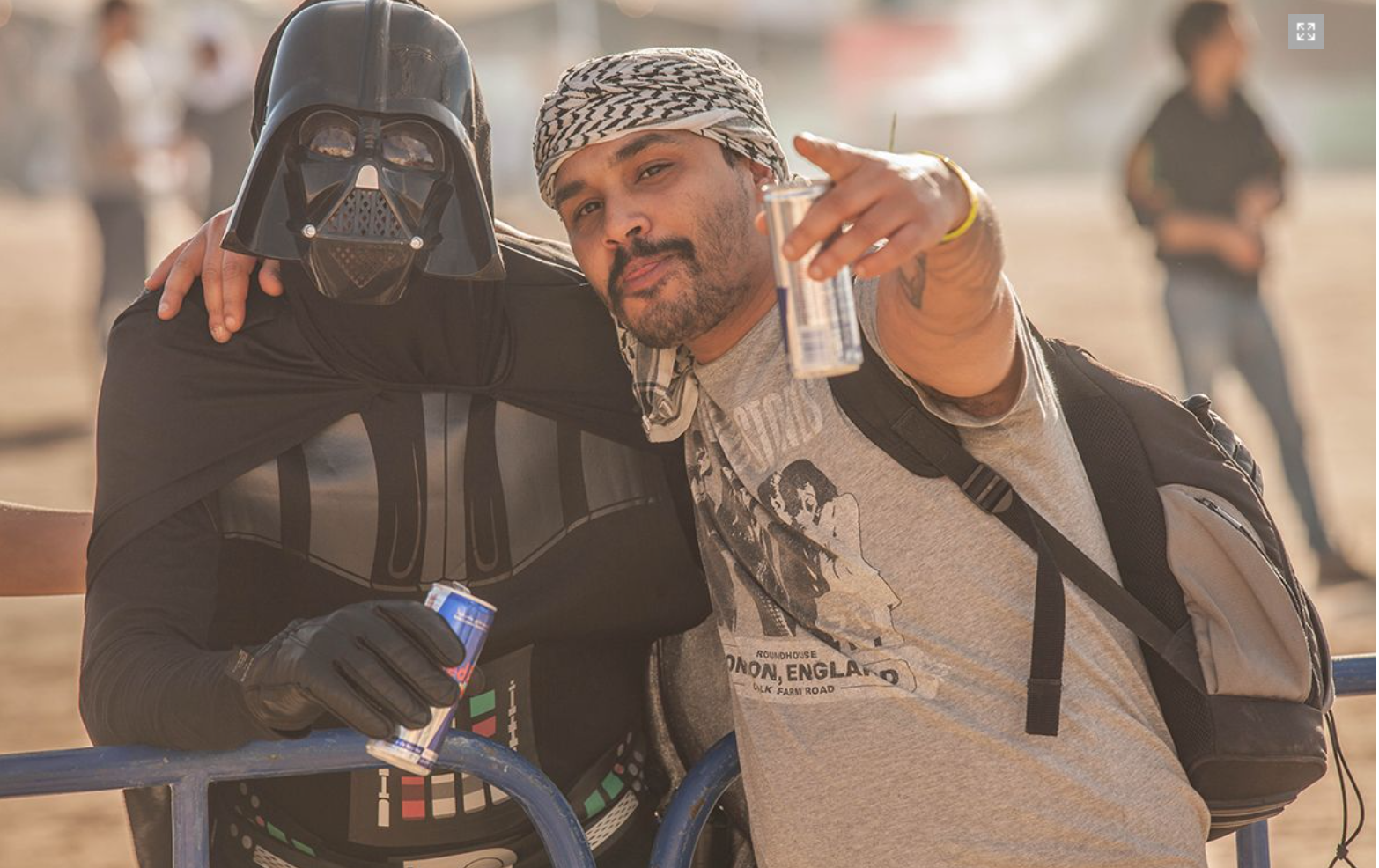
Recently, Mos Espa played host to the Star Wars themed Les Dunes Electronicas festival, a type of Star-Wars-themed Burning-Man/Rave in the desert. Beyond its collection of performers and music-makers, the Les Dunes Electronicas Festival features the opportunity to snack on local food (stuffed dates, couscous, light saber colored drinks), purchase handicrafts from local artisans, and participate in shaman-led yoga classes at sunrise that promise “recovery, relaxation and development of concentration skills await you in the middle of the desert,” an opportunity so potent that “it will give you the energy to continue your dancing the rest of the night.” Dance? We can dance… but where will we park our cars, their trunks filled with Stars Wars costumes? No worries, that, too, has been sorted out for you, young festival goer: “[There’s] no need for a millennium falcon, or even a 4×4,” the website promises, cars will be able to easily access our parking lot.” Though there is likely place for a millennium falcon – or 2 – to touch down in this vast expanse of sand.

The road from Douz to Mos Espa is not an easy one. It begins with a long journey heading Northwest across the largest salt lake of the Sahara, Chott el Djerid. Atlas Obscura, a popular site for off-the-beaten path travelers, cautions that:
“As Chott el Djerid is an enormous salt lake in the middle of an extremely unforgiving desert, navigating through it should be approached with some care. Make sure you have a full tank of gas, and bring more than enough drinking water with you. Going off-road here is dangerous at any time of the year, as even the hardiest four-wheel-drive vehicles may get stuck.” (https://www.atlasobscura.com/places/chott-el-djerid)
It was warnings like this that led us to eventually cancel our car rental for Tunisia. I imagined myself, stuck in a two-door, 2021 stick-shift Peugeot, slowly sinking into the sand. My inability to entice nearby camels with a half-eat granola bar only further the frustrations of the moment as quicksand and shame were our reminders that sometimes, it’s better to hire a local than to trust the instincts of a Norcini.
As it turns out, the salt lake of el Djerid was the location chosen by George Lucas for the original Skywalker residence, the Lars Homestead. After its use in Episode 4, the Lars Homestead was abandoned to Chott el Djerid and the desert elements. In 2000, in anticipation of filming for Attack of the Clones, the Lars Homestead was revived and refurbished, then, once again, abandoned. Since 2000, the Lars Homestead upkeep has fallen primarily to the work of a group of dedicated enthusiasts who have organized fundraising campaigns online (Save Lars!) for the upkeep of the movie prop.

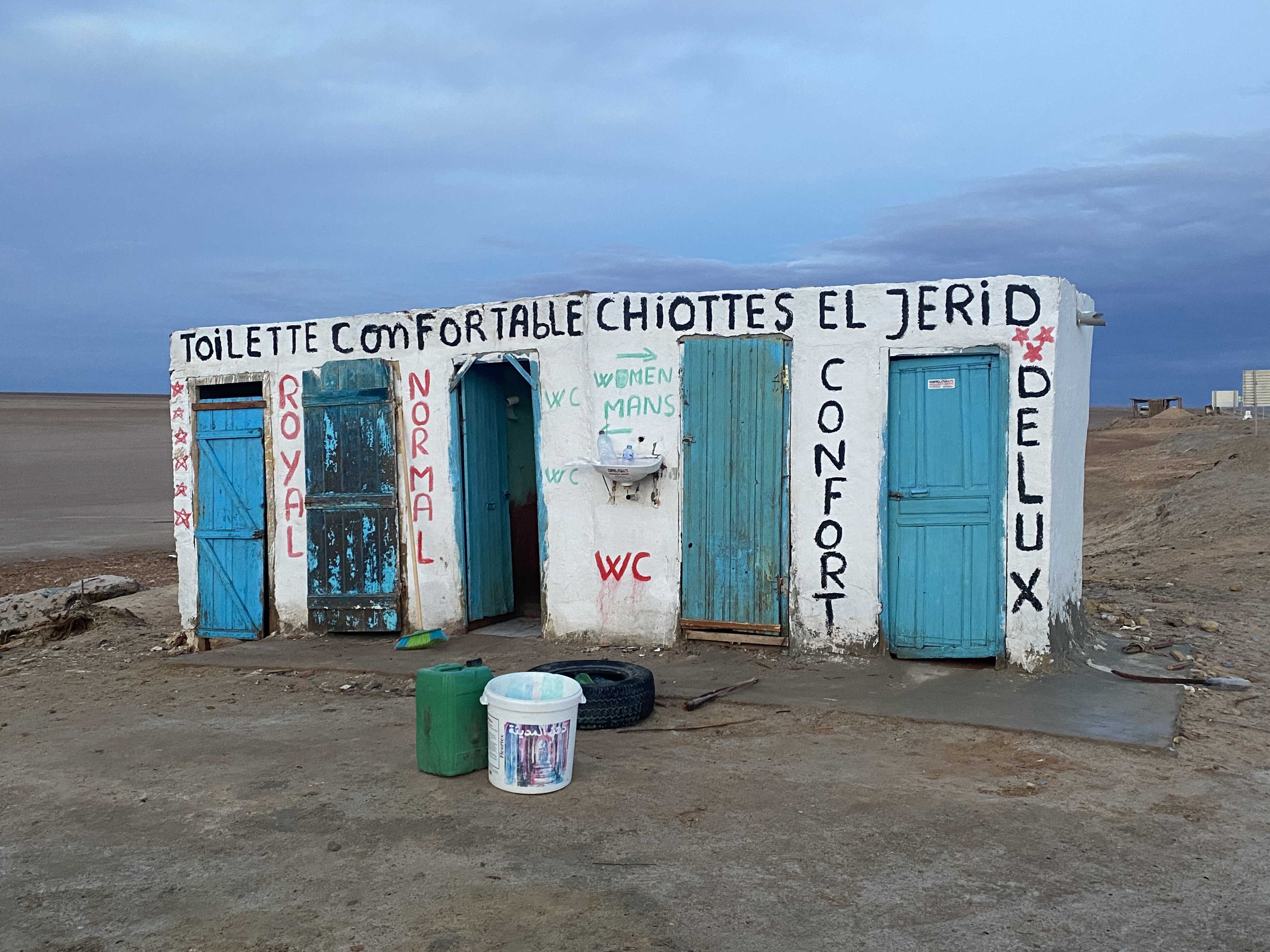
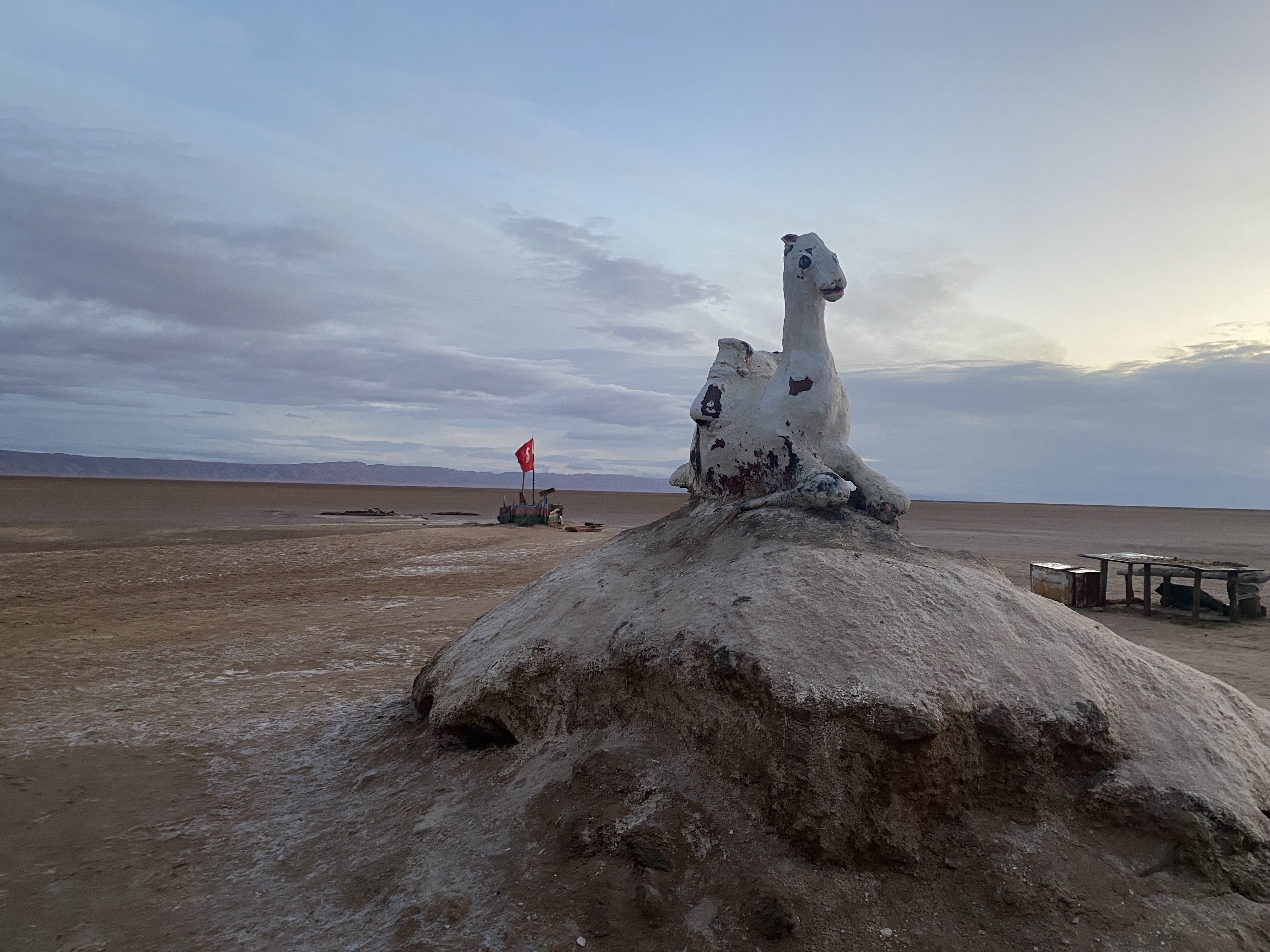
A visit to the Homestead was too far out of the way for our day, but we did make a stop to watch the sun (only one!) rise over the mountains at the edge of the expansive salt lake. That stop included the opportunity to buy Saharan Rock salt, wander onto the Chott, and use the only bathroom available along the cross-Chott el Djerid road. It involved some serious decision-making, for sure (see below).
After a visit to traditional berber rock homes, known as troglodytes, dug into rock formations of the desert, we prepared to disembark our van and board the jeeps that would carry us to Mos Espa. (Note on the berber homes: some are still used today, and these homes inspired the design of the Lars Homestead and the fictional city of Mos Espa. The most dedicated fans can visit the troglodyte used to film the scenes inside the Lars Homestead and be treated to Star Wars themed meal, though the reviews are mixed, at best.)
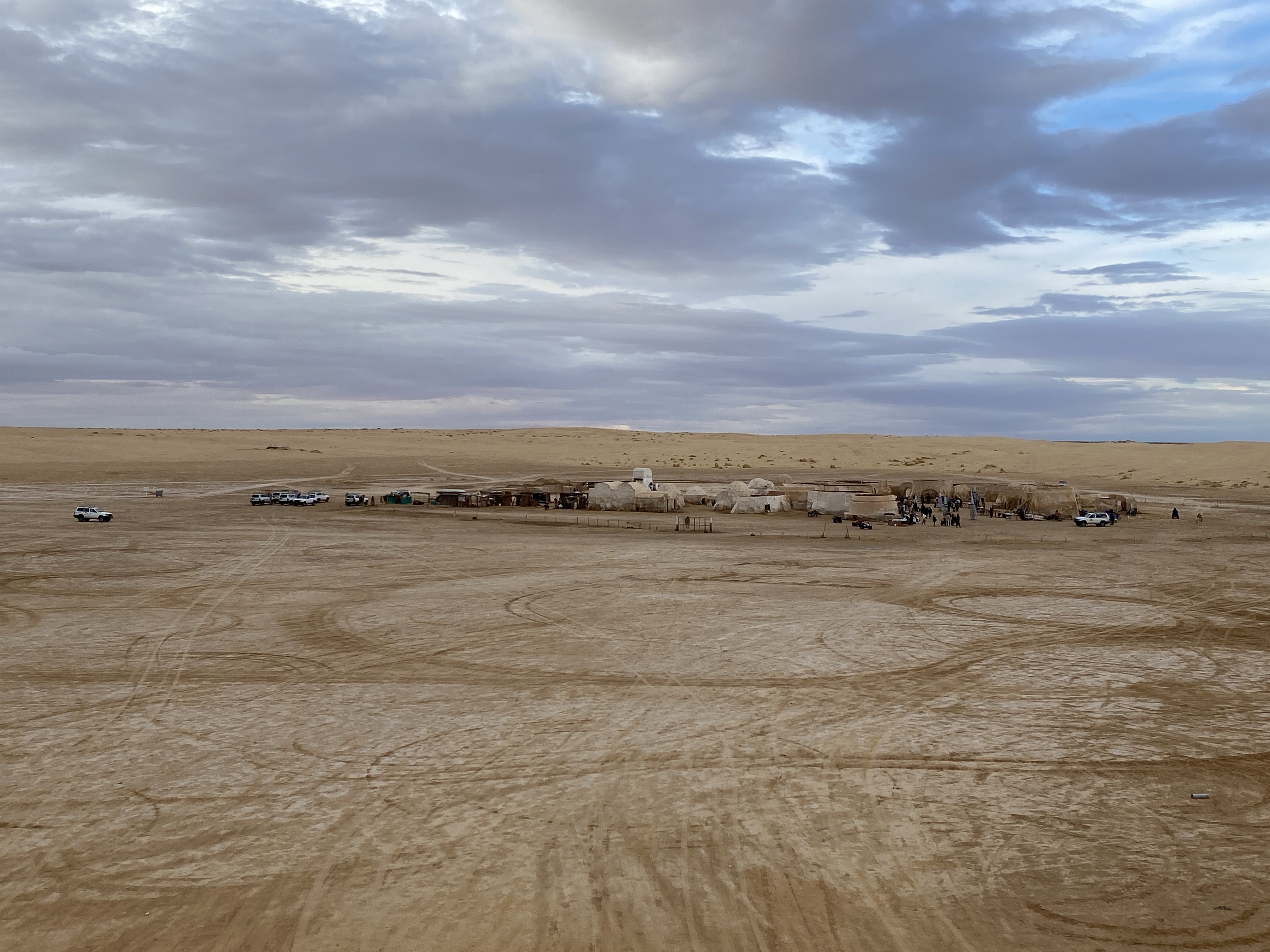
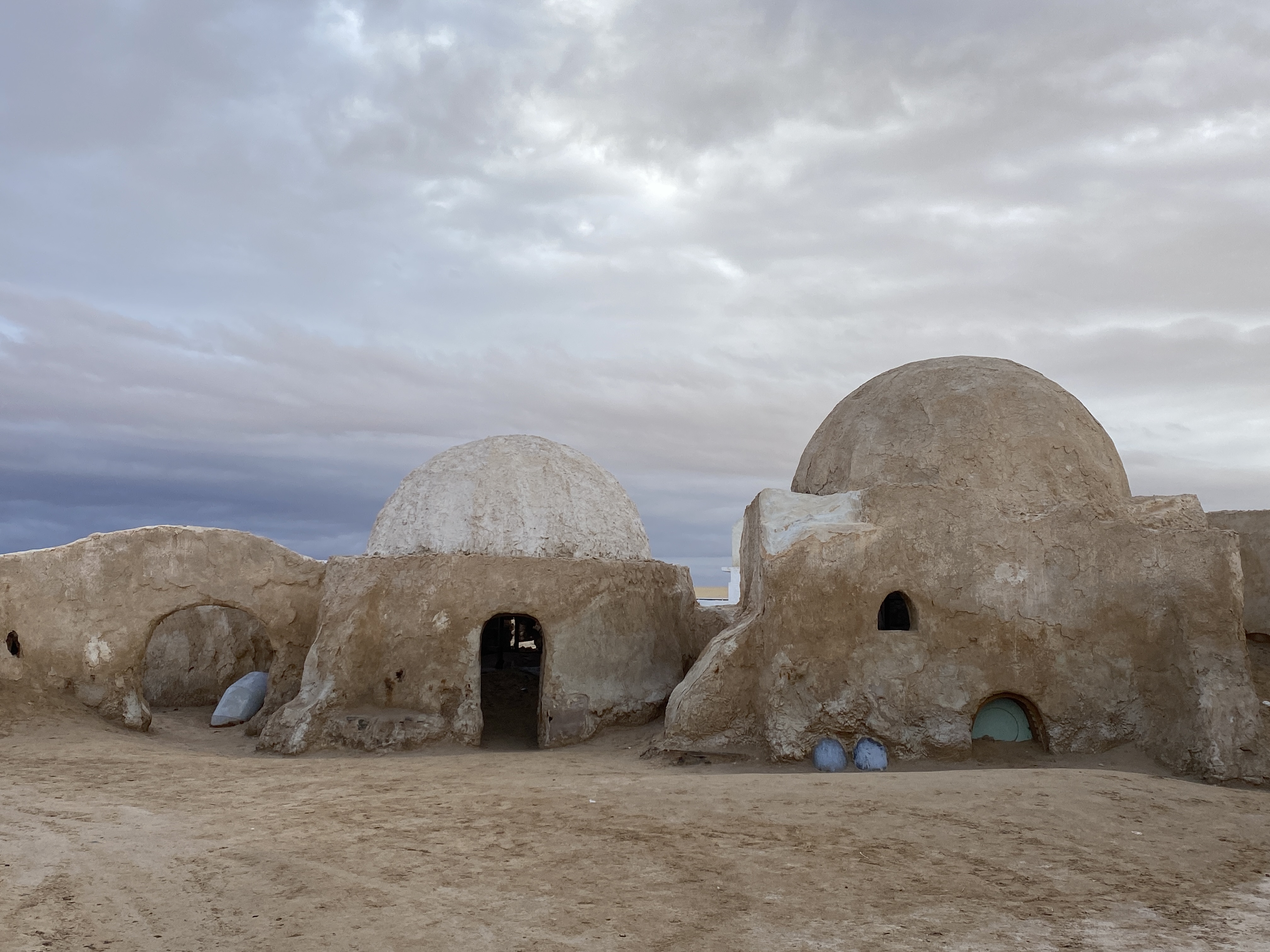
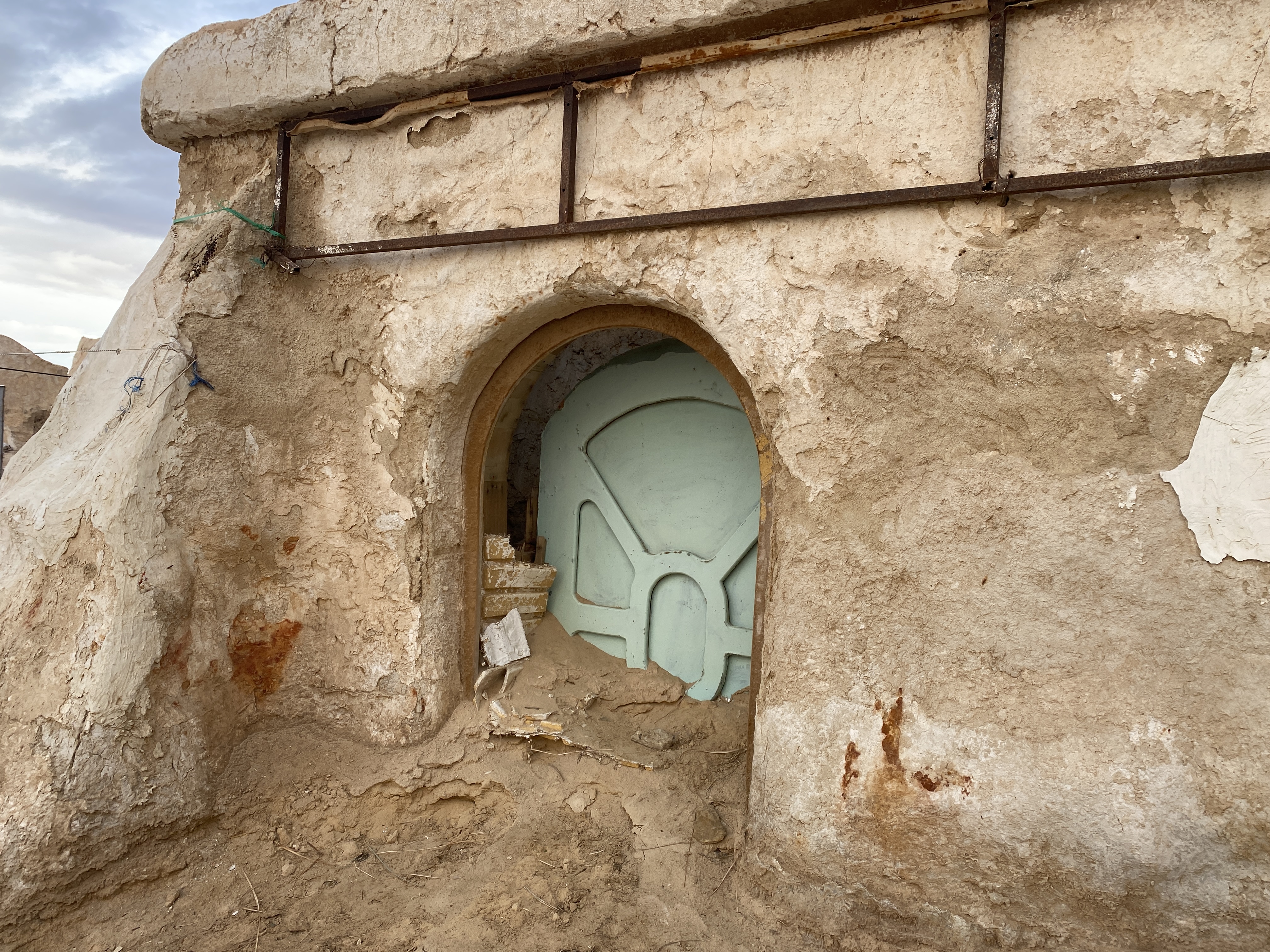
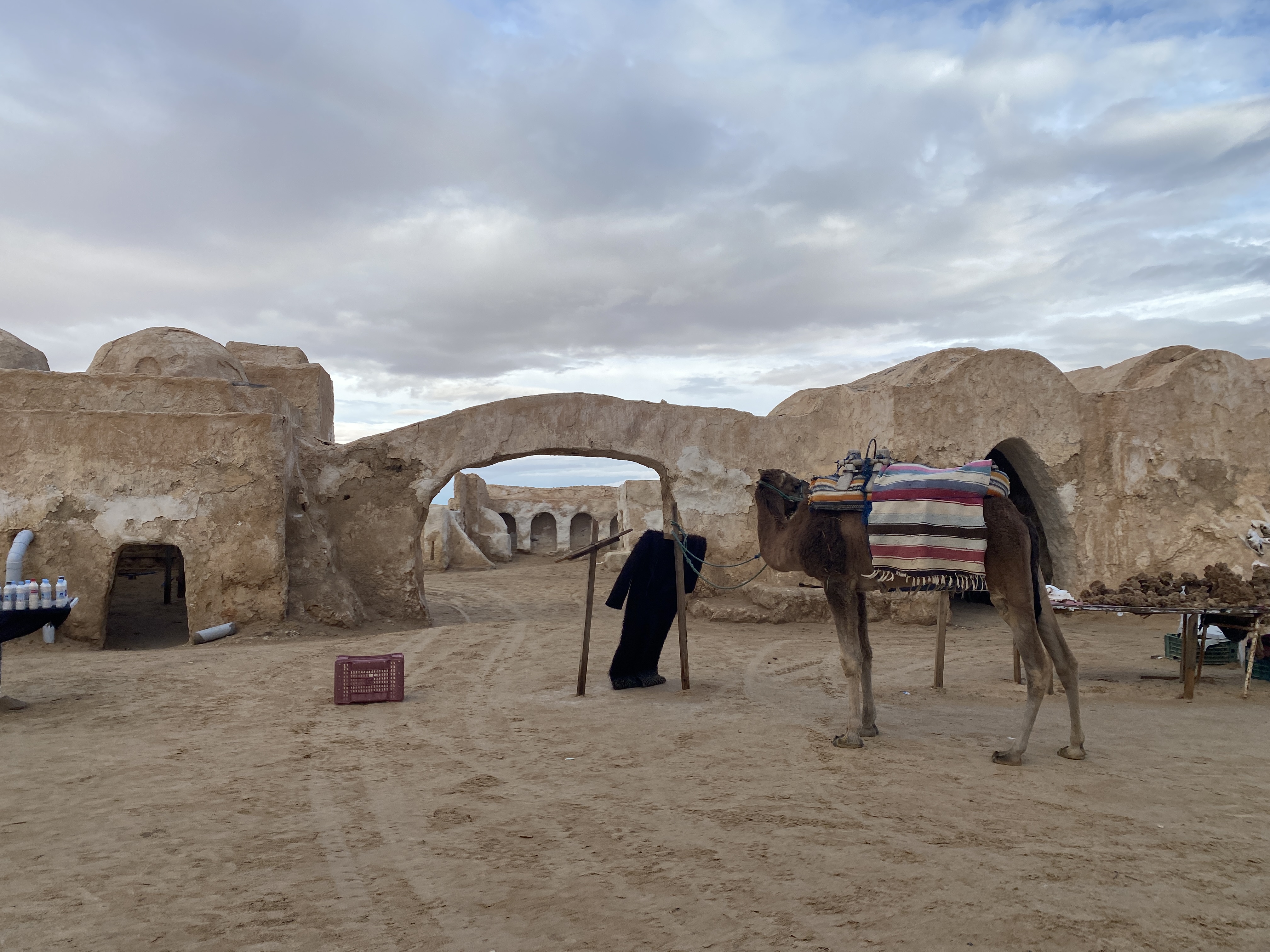
The dramatic final climb over a massive dune brought Mos Espa into focus. There, in the middle of nowheresville, Sahara desert, were the remains of the famed Stars Wars city. The how and why this became the location for the imagination of critical Tatooine scenes can probably be answered by the Wookieepedia. For even a moderate Star Wars fan like myself, seeing this city in the desert was an amazing moment, one that brought a blend of Hollywood magic and childhood memory into reality. It was a fitting end to a dedicated journey off the beaten path. Much of what remains is falling into disrepair, but the Star Wars essence is still quite strong even so many years later. There are peddlers selling dates, crafts, and Star Wars magnets, but much of the space is open for exploration and imagination.
Walking to the edge of town, away from the cluster of trinket dealers and handful of other tourists, I was able to, just for a moment, experience what Mark Hamill was talking about when reflecting on his time in Tunisian Tatooine: “If you could get into your own mind… look at the horizon… [it] felt like you were transported to another world…I really was in a galaxy far, far away.”
“Hey you! Want to ride camel?” A local camel hustler had found me. They always do.
And with that, my Luke Skywalker moment was over. It was time to leave Mos Espa and head back to reality, the desert road, and hopefully, some dinner.


 My Tapeworm's Name is Tapeo